Saturday, 1 December 2012

Freelancing: how to not go bust


Freelancing: how to not go bust

Freelancing: how to not go bust

Jonny Wan explains how he went freelance straight from university without ending up completely broke

I left university and jumped straight into being a freelancer. But I soon learned from experience that this probably wasn’t the best idea. I’d decided to stay in Manchester after graduation but, six months in, I’d run out of money and had to get any job I could to see me through. Eventually I moved back in with my parents in Sheffield, and spent a year solely working on my illustrations. By then, I’d saved up enough money to be able to rent my own place.

Getting the financial side of freelancing sorted is a big headache, but it has to be done. I sought professional help from an accountant, which I’d definitely recommend doing. As well as keeping your financial affairs above board, they can help minimise your tax bill by telling you what you can claim in expenses and equipment when working from home. Accountants’ costs vary, but many offer a free initial consultation.

Companies all have different methods of processing payments, and even if your invoice asks for payment within 30 days, it won’t necessarily happen. If the job is large, I’ll ask for at least a 30 per cent deposit. It’s money in the bank for me, but it also shows that you have the trust of the client.

Having an agent makes invoicing easier, as they handle that whole side. Clients do have to pay the agency before I get paid, but all the money I’m owed has come in on time, so it’s not made that much of a difference to my cashflow. A few agents have a bad reputation for keeping the money back, but I’m lucky to be with a good one.

I’ve always been a bit of a saver, and now I put 20 per cent of whatever comes in straight into a separate bank account to save for tax. I also pay as many of my bills as possible monthly, to help keep track of everything. My general rule is that you should work out your monthly outgoings, and then try to earn enough to double that. During that year after I graduated I realised how much you depend on money to live, which has made me much more careful about what I spend it on, but also encouraged me to push for more.
 
Discover 20 inspiring examples of design portfolios at Creative Bloq.
Jonny Wan
Since graduating in 2008, Manchester-based illustrator Jonny has worked with clients including Nokia, DDB London, Microsoft and Urban Outfitters across fashion, advertising, editorial, product design and more.


http://www.computerarts.co.uk/features/freelancing-how-not-go-bust?utm_source=feedburner&utm_medium=feed&utm_campaign=Feed%3A+computerarts%2Fnews+%28Computer+Arts+News+feed%29

Study tips: Coursework and productivity


It's easy to forget that you're supposed to actually, you know, work, during your time at university. In between cooking terrible food, taking part in a crazy university society, frantically trying to save money or even trying to make money, and trying to stay healthy, you actually have to learn.
We hate to be the bearer of bad news, but unless you’re adept at writing essays in your sleep, you’ll need to work hard to get your degree. Or perhaps you need to pass exams. Read our exam guide.
Organise, organise, organise
Organisation is the most important skill you need. You need to build up a schedule so you can study effectively. Write out your deadline dates, then grab a weekly chart (or make one in excel). Fill in your commitments for that week first of all – lectures, university society meetings, any other meetings you have. Then from there, be honest with yourself about how much time you want to spend on work - one to two hours a day of good-quality working is probably enough, and leaves you enough time to socialise in the evening. Do this every week, altering your schedule as and when you need it, and you should find meeting deadlines becomes a lot easier. You should also organise topics into folders so information is easier to find.
Stay out of the bedroom
Bedrooms are for sleeping, kitchens are for cooking… You get the idea. It’s not ideal to study in your bedroom, as – it sounds silly but it’s true – we have designated rooms for designated tasks and we get used to doing those tasks in there. In short: you’ll get bored or tired and eventually want to sleep in your bedroom, or get distracted by surfing the net, instead of doing work. If you’re struggling to do work, look at your environment. Do you have a lot of distractions in the form of other people, computers, or TVs? Maybe you should find somewhere quieter to do your work, like the university library. A change in environment can see your productivity go up loads.
Pick a good time to work
The generally accepted wisdom is that it’s best to work during the day or in the early evening. Everybody’s different and it might be easier for you to work at a certain time due to time restrictions, but play around with when you do your work as this can make a difference. Make sure you have enough energy – ideally you want to eat around half an hour after eating, and of course, it’s best if you eat slow-release energy food like porridge. Snacking on chocolates and sweets will make you feel better for a while but it’ll come back to bite you when you crash from the sugar high!
Start as soon as possible
Begin working on coursework as soon as you’re given it. This not only means you have more time to work on it, but it also means that the information you’ve been given on it is fresh in your mind, so you’ll have a better idea of what you’re doing. If you really don’t want to actually start on the piece of work, then simply start sketching out some kind of plan for what you’re going to do, and then you’ve got a framework to start from, rather than starting weeks later and having no idea what to do!
Pace and reward yourself!
You need to balance elements of work and play, but studying needn’t be joyless. After you’ve finished a piece of work, or met one of your goals for that week, reward yourself in some way. It can be something small like getting a takeaway for yourself or buying something you really wanted but didn’t want to get for yourself. Alternatively, if you’ve finished a big goal, like your dissertation, you can go out and celebrate with friends or treat yourself to something much bigger, like a holiday.

http://www.independent.co.uk/student/student-life/study-tips-coursework-and-productivity-8122056.html

Launch yourself into the arts industry


Launch yourself into the arts industry

Although a job in the arts can seem like an impossible dream, there is a desperate need for people with the right technical skills


So secret is the next major international film being tweaked on a Bournemouth campus that university staff are sworn to secrecy. Even students working alongside aren't allowed to peek. Some 30 recent graduates are working with leading visual effects house Framestore on the latest movie in post-production.
They've already worked here on the likes of the latest Sherlock Holmes film and Wrath of the Titans. This is an outpost of the London-based Framestore, set up in the small, specialist Arts University College Bournemouth (AUCB) to harness emerging talent in creative design – at a cheaper venue.
Welcome to the world of creative arts degrees. Most are immersive – often simulating the professional, technology-driven environment where these fledgling designers, artists and performers will soon work. And in the words of one university professional, they are "bloody hard work". Many institutions have forged direct links with industry to enable students to gain real-world experience during their degrees and build a portfolio. Right now, digital effects students are all a-quiver at the prospect of more Star Wars films after Disney's purchase of Lucasfilm.
"We work with live briefs," says Simon Pride, head of marketing at AUCB, where students of illustration have been working on the next classic Haynes car workshop manual. And on the Costume with Performance Design course this year students designed costumes for Weymouth's Olympic opening ceremony. Next door, at the award-winning National Centre for Computer Animation at Bournemouth University, a separate institution, students are learning the ropes of digital creation. Recent years have seen a surge in computer-generated imagery, which has come a long way since dinosaurs first roared in the blockbuster Jurassic Park. So even the most-talented artists need an understanding these days of the digital technology underpinning the industry.
Britain is renowned for its sparky, restless creativity and swathes of small businesses have flourished since the 1990s. But in the first year of university fees up to £9,000, applications for creative arts and design degrees have fallen, on average, by 16 per cent – and in some cases by nearly 30 per cent. This, and the omission of any arts-based subject from the new English Baccalaureate, has rattled leading figures in the arts.
Some predict a creative talent shortage in the years to come as students neglect the likes of dancing for subjects such as dentistry. Yet the creative industries, ranging from advertising to architecture, fashion and film and gaming and design, are among the fastest-growing sectors in the UK, says the Confederation of British Industry (CBI). "There's an idea that it's less 'proper' to do a creative degree than a traditional subject, but that's plain wrong," says Pride. Reflecting upon the success of the Olympic ceremonies Martin Roth, director of the V&A, said this month: "If subjects such as art, design, music, drama and dance are squeezed to the edges of the curriculum, Britain's creative economy could be destroyed within a generation."
One and a half million people work in the creative industry, or in creative roles in other industries, according to government figures published less than a year ago. And creative industries contribute 2.9 per cent of the UK's gross value added – an economic indicator used to measure the performance of an industry sector – and account for 10.6 per cent of exports of services.
"It's vital that the key strengths of businesses in the creative sector are nurtured," says the CBI. A separate report from the Centre for Economics and Business Research forecast that London's media, internet and creative industries will become vital to the capital's economic growth in the years to 2017. And, as AUCB points out, employment can be healthy even if salaries tend to be lower: 97 per cent of AUCB graduates find work within six months, a result that places the university fifth in the UK for employability.
Nearly one in three people in the creative sector will work for themselves at some point, according to government figures. It's a prospect about which composer Nicky Royston is fairly sanguine. After graduating in composition from the University of Chichester in October this year, she already has several film credits to her name and is confident about supplementing her income with teaching or creating backing tracks for performers. "Ever since I heard the soundtrack to Casper the Friendly Ghost as a little girl, I've wanted to write music for film – it's incredible how music can control emotion," she says. "I've been composing since I was 14. I get a real buzz from hearing my music being performed. I know it's competitive – you have to network and pitch for work."
Would-be students face a huge choice of courses in visual and creative arts, from painting, writing music, fashion, dance, drama, design and film production. World-renowned courses are on offer across Britain, from the cluster of London-based colleges within the University of the Arts London and the University for the Creative Arts, to University College Falmouth in the South-west, to the art schools of Edinburgh and Glasgow.
To help you choose the right course, industry body Creative Skillset (www.creativeskillset.org) gives recognition to courses that are judged to offer solid industry links and prepare students well for immediate work. This year it accredited 96 courses, from photo imaging, post-production to interactive media and art and design. "Employment in the creative industries continues to grow at 2 per cent; however, there's an oversupply of graduates who've received a general 'creative' education," explains the Creative Industries Council. These days, pigeon-holing people as arts or science types creates a false distinction: as the industry becomes more digitised and integrated, employers need graduates with an understanding of science and maths as well as the arts.
Having an intelligent "Plan B" is essential, says Ben Hall, head of music at the University of Chichester where about 600 undergraduates study a range of specialist music degrees with a highly practical component. "We are keen for our students to understand they will be defined by how they are paid – even West End performers have to supplement their fees," he explains. So students of the hugely popular musical theatre degree learn the nuts and bolts of staging a show – with a view to working in events management, for example. "Your Plan B might be huge fun," says Hall. And the good news for musicians is that most find work – partly owing to a huge demand for children's music lessons.
No doubt salaries within creative arts often lag behind traditional professions: government research shows that a third of creative arts graduates were earning less than £15,000 some six years into their career, although three-quarters reported they were satisfied with their work.
"It's a myth to suggest there are plenty of jobs out there for artists," says Stuart Bennett, head of the University of Edinburgh College of Art. "Many students go into self-employment. Our third-year focuses on the external to give a real idea of what it's like to be out in the art world."
Students are encouraged to set up co-operatives, work on live commissions and seek internships, Bennett says, "to give an idea of what it's like to make your way as a young artist".
Edinburgh, a respected art college, is collaborating with university departments to enrich the scope of the degree. A joint project with the university's animal science Roslin Institute – responsible for Dolly the Sheep – resulted in an exhibition featuring animals in art. "We are trying to create dynamic artists who have a string to their bow above and beyond the discipline in which they have studied," says Bennett.
http://www.independent.co.uk/student/postgraduate/postgraduate-study/launch-yourself-into-the-arts-industry-8343932.html

How to use marketing techniques in your job search


How to use marketing techniques in your job search

When it comes to getting noticed by employers, there's so much that employers can learn from the world of marketing. Clare Whitmell offers some ideas
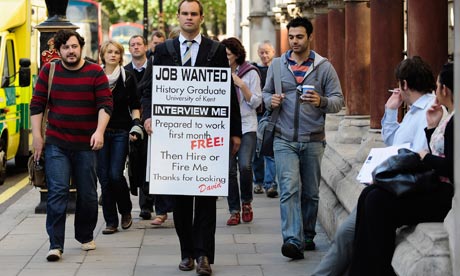
Jobless Rowe wears a sandwich board
Job seekers could use marketing techniques to get an employer to notice them. Photograph: Kieran Doherty/Reuters
However distasteful it may appear, getting an employer to choose you over all the other applicants has parallels with a shopper choosing one brand over the other. (And just as consumers will often calculate a price-to-quality ratio before deciding, employers are also looking for value and a return on investment.) But with so much competition in the job market, one of the biggest problems candidates face is getting noticed in the first place. Here are some ways that you can use marketing techniques to add impetus to your job search and attract an employer's attention.
Work out your USP
To wow an employer, your application materials must make your "unique selling proposition" clear and distinct. Think about what differentiates you from others, and the value an employer will gain if they hire you. Consider adding a short statement under your name that crystallises what you do, how you do it, and the value you create.
Something such as: "Book marketer, driving sales and profits through online channels"
Or for a CV writer (but this isn't mine, by the way!): "Developing uniqueCVs that get interviews and jobs"
If you're applying for different roles (or in different sectors) you'll probably need to adapt your message to different audiences. Your CVs and cover letters must be relevant and focussed on that role, company and sector. They should also be suited to the needs of your reader. Consider developing a range of formats for different situations, in addition to a full CV.
Emphasise benefits not features
The problem with many CVs is that they read as a list of what the applicant has done, but don't spell out why the employer should care. Don't just describe what you do but translate your strengths, abilities and experience into bottom-line benefits for the employer. Everything you include in your application must build up your credibility and appeal. Train yourself to do this by thinking to yourself "so what?" after each sentence. This will help you move away from phrases such as "duties included" or "responsible for" to focus on the impact of your work and your achievements – and how these are relevant to your potential employer.
Use more than one marketing channel
Marketing professionals adopt a number of approaches to target their customers, and you should do the same if you're trying to get an employer's attention. Word of mouth is often an effective way in, so think about how this could work for you. Perhaps you can get a direct referral from someone you know, for example. A range of online marketing efforts might also help. LinkedIn groups participation and activity in social media channels (Twitter, blogs and forums) can be effective - especially when combined with offline approaches, such as networking, speculativeapplications, working with specialist recruitment agencies, or even doing some voluntary work.
Be confident
While arrogance is an undesirable trait, you won't be able to convince anyone to hire you if you show doubt in your abilities, or if you come across as apologetic, needy or insecure. Portray a positive can-do attitude and make sure your CV has enough examples of how you've achieved results similar to those needed in the new role. If there are weak points in your application (for example, you're missing experience or skills) prepare to explain how you're overcoming them.
http://careers.guardian.co.uk/marketing-techniques-job-seekers-applications?CMP=

How to find unadvertised jobs


How to find unadvertised jobs

Research suggests that as many as 60% of job vacancies are unadvertised. Here is some advice on how to make sure you're making the most of the unadvertised job market
Polar bear standing atop an iceberg floating in the sea
Advertised roles only represent the tip of the iceberg in terms of the number of jobs available. Here's how to find unadvertised positions. Photograph: AlaskaStock/Corbis
Many jobseekers are unaware that the roles advertised in the press and online are really only the tip of the iceberg in relation to the total number of jobs available at any one time.
In these tough economic times, recruitment agencies and employers can save money and cut back on advertising because they already have access to so many CVs. Indeed, research suggests that as many as 60% of all jobs are unadvertised.
Jobs that are advertised often attract dozens or even hundreds of applications. Investing time and effort in tracking down unadvertised jobs, however, will almost certainly pay off because fewer people will be applying for them.
So here are some practical strategies for finding unadvertised vacancies.

Networking

These days many companies pay a bonus to employees who can introduce a new member of staff. Companies prefer to do this because they can save on expensive advertising and agency fees. Employees who have been offered this bounty will be only too pleased to hear from friends or former colleagues who are looking for work.
So your first strategy should be to to make sure that all your friends (including your Facebook friends), neighbours, former colleagues or business associates know that you are looking for a new position. If there are unadvertised jobs with their employer then, assuming you have the right skills and experience, they will probably be keen to help.

Use social media

You should also use a professional networking site like LinkedIn. Make sure you have a recruiter friendly LinkedIn profile with a strong professional headline, for example, "John Smith – experienced chartered accountant". Use plenty of keywords and phrases that relate to your particular skills set and experience. Recruiters routinely search LinkedIn looking for candidates for their unadvertised jobs; having a well-written profile ensures they can easily find your details and contact you.
You can also join some of the LinkedIn professional groups. There are hundreds of professional networking groups on LinkedIn covering almost every job category and profession. Mention in your introduction that you are looking for work; other members may get in touch if they have a suitable opportunity and, by participating in conversations, you will also pick up useful information about possible openings.
Twitter is also an excellent source of jobs. They're not jobs that are advertised conventionally but a quick search will demonstrate that there is plenty of tweeting going on between jobseekers and recruiters.
Recent research in the US suggests that many companies are either using or are planning to use social media as a key part of their recruitment strategy, and it's happening in the UK too.
It's easy to join Twitter and start following potential employers and their recruiters. You can make direct contact with any other subscriber so tweet the managing director or recruitment manager of an organisation and ask them directly if they have any suitable vacancies (don't forget to include a link to your LinkedIn profile). You won't always get a response, but Twitter is a friendly platform and some senior managers may be impressed by your initiative.

Get alerts about potential jobs straight to your inbox

Use Google Alerts to get regular email notifications of events that might lead to a job opportunity. For example, placing the simple search string, insurance, jobs, Yorkshire in Google Alerts led me to a news item referring to a large insurance group that is planning to open an office in York creating over 300 new jobs for insurance professionals.
Setting up your personal press cuttings service in this way is useful to identify potential unadvertised job opportunities.

Contact employers directly

If you hear about a possible job opportunity then you can make a direct approach to the company. Don't send speculative applications to the HR manager or recruitment manager as you are unlikely to get a response. Take some time to research the company using Google or LinkedIn and try to identify the person within that organisation who might have a suitable vacancy; then send a speculative application letter and your CV to them by name.
Sending a direct or speculative application really does pay off, but it's quality rather than quantity that's important so don't send out a blanket mail shot to 100 companies. Identify just a few organisations and send a customised application to each of them. Even if they don't have a current vacancy many companies acknowledge speculative applications and generally keep CVs on file for at least six months.

Attend trade fairs and conferences

These are events where potentially all of the main employers in your field are gathered in one location. You can find out about upcoming events in the press and on the internet. The same applies to careers fairs, which are run on a regular basis by universities and are often open to both students and graduates. When you attend these events take plenty of copies of your CV and some business cards, and start networking.
Of course you should keep responding to conventional job advertisements, but rather than sitting at home waiting for the phone to ring, take control of your job search and be pro-active.
Jeremy I'Anson is a professional careers coach and the author of 
You're Hired! Total Job Search 2013
http://careers.guardian.co.uk/careers-blog/how-to-find-unadvertised-jobs?CMP=

Sunday, 18 November 2012

How to build a long-term career plan


How to build a long-term career plan

Research shows that 39% of British workers don't plan ahead in terms of their career goals. If you feel daunted by the idea of planning ahead, here's a step-by-step guide to help you
Man standing in front of traffic cones in arrow-shape
Knowing which direction to take your career in is difficult, but breaking it down into manageable stepping stones can help. Photograph: Alamy
How would you describe your relationship with your employer? Are you new to the role and still in the honeymoon phase? Happily committed to a long-term partner? Or are you settled, but not satisfied, keen for new challenges but not quite sure how to move forward and so sleepwalking through the nine-to-five instead?
If the last option applies to you, you're not alone. Recent research found that 39% of British workers don't plan ahead in terms of their career goals and 25% have no long-term career plan at all. Those who do plan their career goals take a relatively short-term approach, looking on average less than three years into the future.
If you don't look ahead you could find yourself stuck without a sense of direction and at risk of being left behind. The research also demonstrated that only 16% of us feel our current job fits well with our long-term career goals. Fortunately, if you are stuck in a career rut, it is possible to plan your way out.
The notion of a job for life feels outdated these days; it's becoming more usual to move around, with each role and each organisation adding to your CV and facilitating your next move. We are also continuing our careers into later life, which means we need to plan all the more.
Career planning means thinking big while also being prepared for slow-burn development. First, clarify your career objectives by identifying what you are good at and what you enjoy; you can then build upon this to thrive in your career. Ask yourself what specific achievements you are proudest of, and what elements of everyday work bring you the greatest satisfaction. Many people find it difficult to examine themselves in this way so ask friends and family to remind you of tasks you've talked about with enthusiasm. Your career objectives should centre around finding a role with similarly enjoyable and interesting elements.
Next, identify transferable skills that will make you attractive to a new employer. These are generic skills that are needed in many roles, for example, working under pressure or interacting with people to negotiate and persuade. To identify these, consider any feedback you have received from others, perhaps as part of a performance appraisal. It will be important in competency-based interviews to explain how you have applied these skills and the outcome achieved. Think of describing and demonstrating the skill using a STAR structure – situation, task, achievement, result.
Then consider which industries or organisations you are interested in. You have two options here in terms of how you balance priorities. Some people will begin by looking at what they most enjoy in their current job and finding ways to make that a bigger part of their career. Others, however, might look at the industries they feel most passionate about and work out how their skills set could fit in.
What's important is to remember that each job is a stepping stone in your career progression. You may have to make some compromises as you work towards your dream job. There are a variety of resources online to help you work out what your motivators and skills are – companies such as SHL offer sample tests for free.
Once you have an idea of what you'd like to do next, ask friends for their thoughts and explain why you would like to work in a particular role as this will help you rehearse for interviewers' questions. Some people are also lucky enough to have a line manager who has the time, know-how and desire to provide career coaching advice. If you don't feel comfortable approaching your line manager, however, don't be afraid to seek advice elsewhere. There may be someone approachable higher up in your organisation, or someone whom you know personally and whose career you have admired.
Once you have a clear idea where you'd like to go and the skills you'll need to develop, start looking out for opportunities to expand your experience. This doesn't necessarily mean changing jobs; with your new sense of direction and motivation you may see fresh opportunities within your current role. If you are able, book time with your manager to discuss the skills you're looking to develop and why you'd like to work on specific projects. A good manager will welcome your desire to enrich yourself professionally – if you're not getting this support, it may be time to look elsewhere for volunteering opportunities or an organisation where you can take on new challenges.
Making long-term plans for your career can be daunting but breaking it into a series of stepping stones, and asking yourself where you want to be in five years' time, is a good way to keep focussed on your goals and get the best out of each job in terms of its contribution to your overall career.
Penny de Valk is the chief executive of Fairplace
http://careers.guardian.co.uk/how-to-build-long-term-career-plan